“I know Victoria's secret
And, girl, you wouldn't believe
She's an old man who lives in Ohio
Making money off of girls like me"
The viral hit chorus of American singer-songwriter Jax’s “Victoria’s Secret” diss track put lyrics to the scandals that have plagued the brand for years. Former Victoria’s Secret Chief Marketing Officer Ed Razek has faced accusations from models of mistreatment and has been criticized for his refusal to cast plus-size—or really even anything above a size two—models. Then there are CEO Les Wexner’s personal and financial ties to Jeffrey Epstein that slashed the brand’s reputation. It's safe to say Victoria’s Secret is far from new to bad press.
And the musical sucker punch that is Jax’s chorus made an anthem out of those long-held negative views. In response, the marketing team took defense to a new level: enlisting a full-on reality series-style rebrand under the helm of new Chief Creative Officer Adam Selmen.
Selmen, a much younger Texan, steers the ship with the branded reality series Angels Among Us. The series was directed by Nadia Hallgren, who created the hit series Popstar Academy for the girl group Katseye, alongside Boardwalk Pictures, best known for America's Sweethearts: Dallas Cowboys Cheerleaders. It follows a similar girlhood format as Hallgren and Boardwalk Pictures’ previous work. In each of these series, directors gather a group of girls and encourage them to form close bonds, highlighting their support for one another, only to have them compete for a coveted spot. In Popstar Academy, contestants live together, helping each other with everything from learning choreography to overcoming injuries and providing emotional support. On Dallas Cowboys Cheerleaders, the returning veteran cheerleaders help train the rookie candidates, whom they’ll compete against for a spot on the team.
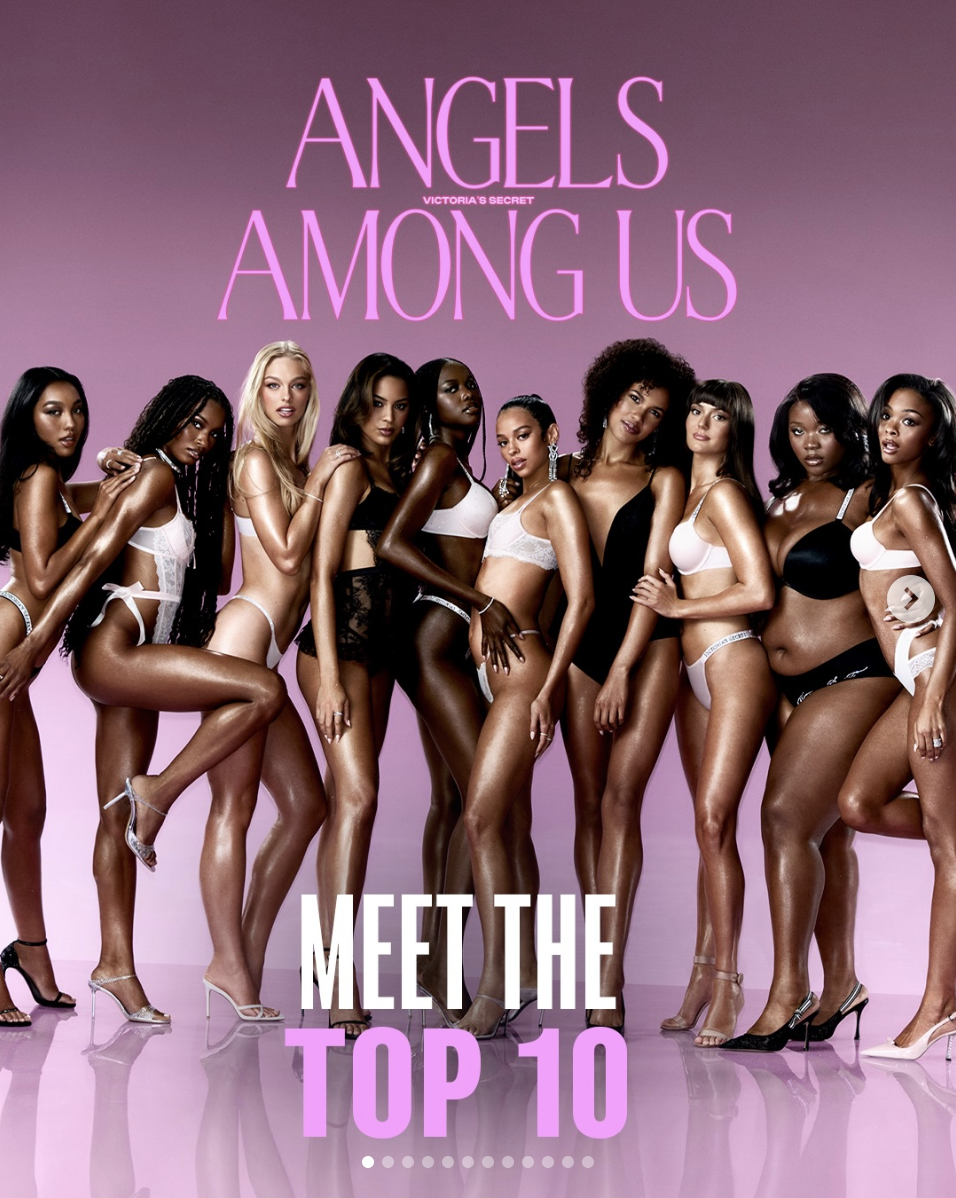
On Angels Among Us, Victoria’s Secret launches a virtual open casting call. From there, they selected hundreds to participate in live auditions. Selmen then toured the country with previous Victoria’s Secret Angels as guest stars to scout new talent. After their three-city tour, Selmen and his fellow judges selected 10 girls to compete in a series of photoshoots and runways during a month-long stay in New York City. This led to the finale, where the winner walked the runway at the iconic and newly revived Victoria’s Secret Fashion Show.
Like in Popstar Academy, contestants live together in a hotel, and those with more modeling experience train those with less experience to perfect their runway walks. In each series, producers capitalize on this support to portray an image of girlhood, even while creating competitive environments. For Victoria’s Secret, that interconnected support becomes the basis for their rewrite. Producers focus on the contestants’ unique life stories and their shared goal.
It's an interesting angle of the brand. Yes, every girl selected is stunning, but the editors focus more on their stories. One contestant, Brielle Reimann Hoggan, is Mormon and struggles with her religion’s ideas about modesty and potential backlash from her community over her participation in the series. Contestant Andreína Martínez’s story centers around her family’s immigration from the Dominican Republic, and (spoiler alert) winner Solange Omon’s resilience is shown through the work she does to support her family after their immigration from Cameroon. In a show about modeling, conversations about the contestants' bodies are notably absent. Instead, it's a series about resilience, friendship, and growth. Through the lives of its contestants, Angels Among Us reinvents Victoria’s Secret as a symbol of empowerment and diversity.
One contestant, Mar Nguimatsia, shared her family’s positive history with the brand, highlighting its inclusivity. “They made a bra my size, so I’m an angel too,” Nguimatsia says in Episode Two of the show when describing her family’s reactions to the brand.
Other contestants describe the power they feel in trying on the lingerie and angel wings. In these short clips, Victoria’s Secret redraws its image and history, painting a portrait of inclusive sizing and female empowerment.
It's really an ingenious and quite simple tactic. When your brand goes viral for its wrongdoings, go more viral for your rebrand. The first episode of the series gained 7.8 million views on YouTube. Every episode following the premiere garnered at least one million views, with some hitting four million. Contestants themselves promoted the brand, drawing more impressions, and a video of Omon walking the runway hit 11.8 million views on the brand’s Instagram.
For a population with short attention spans, covering up your viral scandals with a more viral TV series seems to work, especially among younger audiences who’ve had less time to cement negative opinions. It remains to be seen if this wave of goodwill will hold, though.