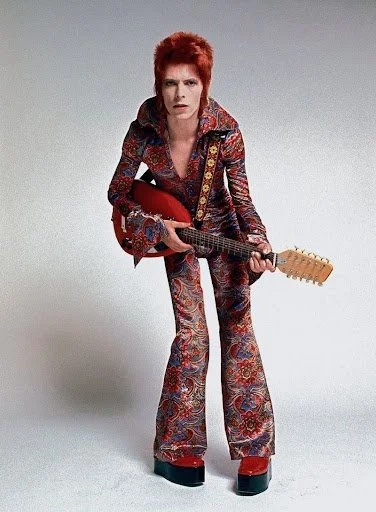
To say that David Bowie left an indelible mark on the world of music is an understatement. But his influence stretches beyond music. He has been able to transcend classifications of genre, creativity, and even art itself. With a career spanning glam rock, funk, electronic, painting, and acting, he truly has done it all. To dissect Bowie’s entire career would be impossible, and I don’t intend to. What I would like to do is examine one of his quotes and how I feel it reflects his philosophy on creativity—a philosophy which has been lost upon newer artists.
If there’s one thing that David Bowie was known for, it was subverting expectations. Not just those of mainstream audiences, but his own as well. In a 2002 interview, Bowie stated that artists should “always go a little further into the water than you feel you’re capable of being in. Go a little bit out of your depth, and when you don’t feel that your feet are quite touching the bottom, you’re just about in the right place to do something exciting.” This is at the heart of what I see as the issue with creative industries today.
Subversion.
I don’t know if it’s because of social media and the greater sense of a collective consciousness regarding pop culture, but it’s almost as if the ability to take creative risks has been lost among artists. I quite frankly can’t remember the last time I was intrigued by a new album or a film by a young singer or director.
Sure, I’ve gotten excited for a project, but I’m never surprised. I haven't felt a sense of curiosity or the feeling that an artist is going out of their depth into new territory. There seems to be set expectations placed on younger artists to conform to a certain archetype that makes their stardom much more marketable. And the market rewards that via box office hits, social media attention, and fame beyond all imagination. But stray a bit away from familiarity? Tread new territory? No one seems to care. So, everyone just plays it safe. Stick to one niche that everyone seems to love.
That’s not to say that it doesn’t work for some artists. Because it does. But when EVERYONE does…well, that just makes things outright boring. And when I say this, I’m not just thinking about Bowie, but also artists such as Gary Oldman or Ridley Scott.
There’s also another glaringly obvious differentiation between artists of past generations and today: they were more knowledgeable about the arts. I’m trying not to sound pretentious by saying this, but truly, how can artists expect to produce good and exciting art if they're not well-versed in all forms of art?
I feel that Bowie was the epitome of this. He was just as inspired by Elvis Presley and The Beatles as he was by Brian Eno, The Beat Generation, avant-garde theatre, and even the art of miming. He let waves of various movements, thinkers, and art forms inspire his work. And audiences around the world saw the culmination of his influences through his personas. Whether it was Ziggy Stardust, Pierrot, or The Thin White Duke, Bowie became whatever his artistic muses were at that present moment. He blurred the lines between performance and reality.
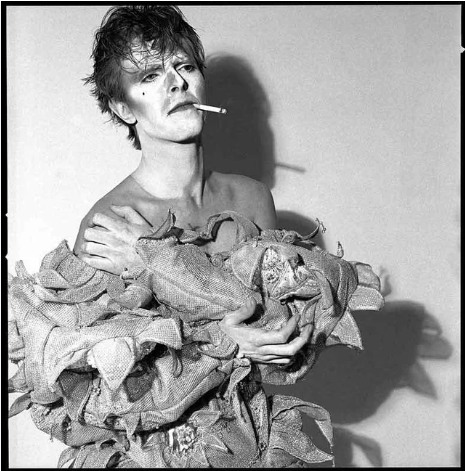
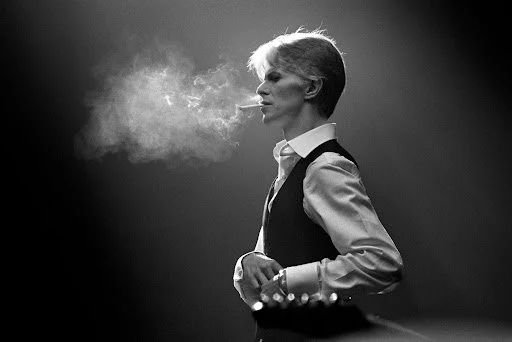
This is perhaps the gift of David Bowie that just keeps on giving. Just when people thought he had carved out his complete identity as an artist, when he’d shown the world all that he was capable of, he’d reinvent himself again and again, surprising audiences and defying expectations.
While I don’t think that artists need to go to extreme lengths, such as creating new characters for the sake of their craft, his perspective on subversion as the epitome of creativity should be followed more closely. And just as much as the artist can learn from this, the audience and average consumer can as well. They can certainly take Bowie’s philosophy and apply it in a critical way. When your favorite artist or director releases new material, consider their past work. Consider whether they’re pushing their artistry to new heights and making you feel curious. Curious to see something new that will shatter your own expectations.
That’s the hallmark of great art. It’s earth-shattering. Revolutionary..